


Hey - it’s Alex, this time together with my ICP expert Douwe.
You sometimes join a meeting and more notetakers are in the room than humans.
Today, we share how you can turn your meeting notes into fuel for your sales engine.
We will cover:
Discovery Call Analysis & Coaching
Demo Call Debrief & Coaching
Email Follow Ups
Objection Patterns
Customer Quote Library and LinkedIn post ideas
All powered by SPICED.
👉 Get access: The SPICED Granola Guide (+11 copy-paste ready prompts)
In case you missed the last 3 episodes:
✅ The BOFU Content Playbook 2026
✅ 8 Founder-led Signal-Based Outbound Campaigns
A quick word from our sponsor
I include only sponsors I would personally recommend. If you’re interested in reaching 28,000+ SaaS operators, sponsor the next newsletter.
📢 Granola — The AI notepad for people in back-to-back meetings
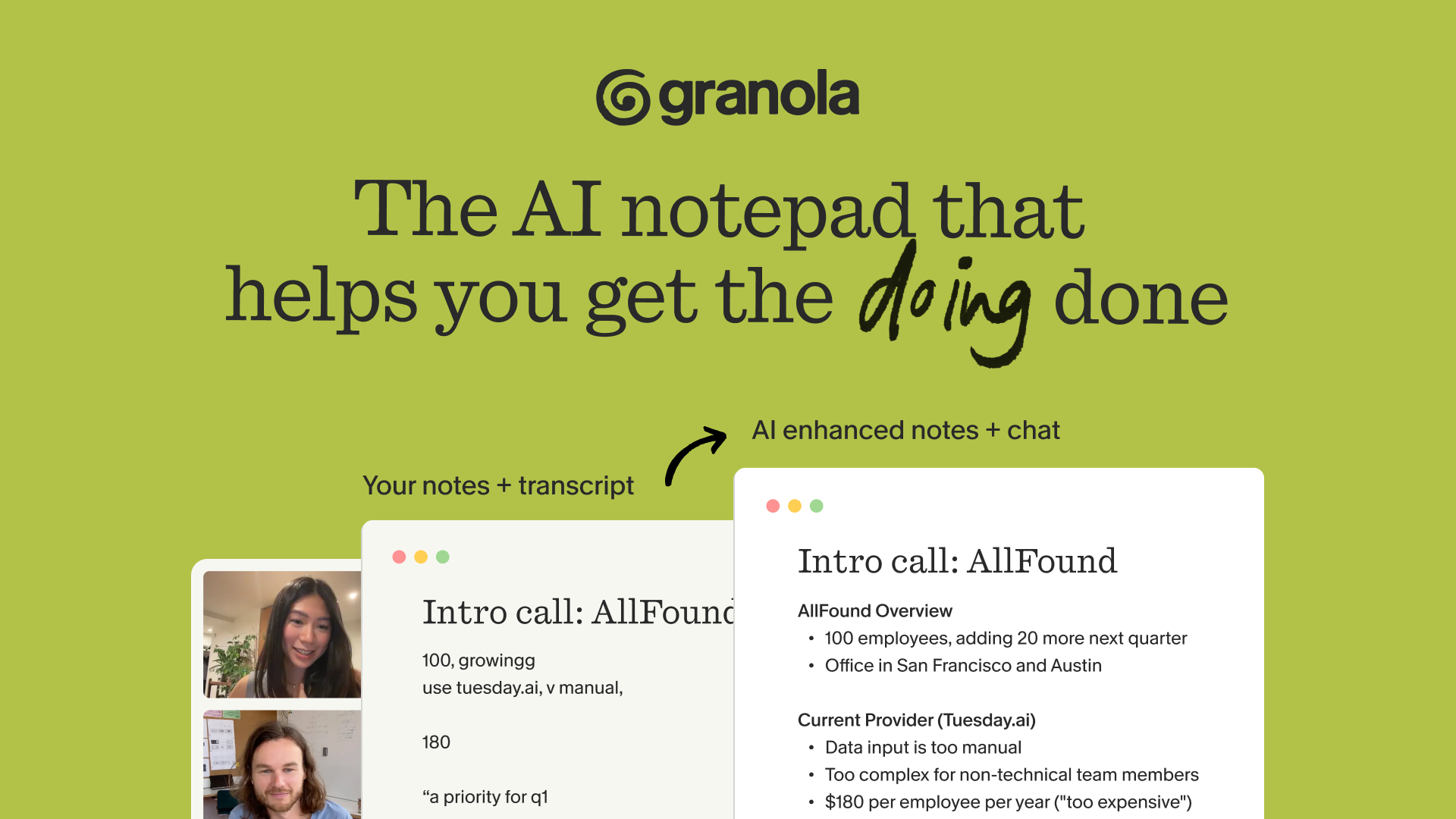
Most AI note-takers just transcribe meetings and send summaries afterward. Granola is different: it’s an AI notepad.
You start with a simple notepad and write down what matters to you while Granola transcribes in the background.
After the meeting, Granola combines the transcript with your notes to generate summaries, action items, and next steps from your perspective.
Then you can chat with your notes. Use Recipes (pre-made prompts) to draft follow-up emails, pull decisions, prep meetings, or turn conversations into real work in seconds.
Think of it as a super-smart notes app that actually understands your meetings.
📢 Codewords — Words in, working agents out

CodeWords is the AI-powered automation platform that turns plain English into production-ready workflows. Describe what you want automated, and Cody builds, tests, and deploys it for you — no code, no canvas, no maintenance.
Then put your operations on autopilot:
Build workflows by chatting with Cody; ship automations in minutes, not weeks
Connect to 2,800+ apps like Slack, Gmail, Notion, HubSpot, and Google Sheets
Let Cody debug, optimise, and keep everything running 24/7 while you sleep
Ready to turn your repetitive tasks into a self-running system?
SPICED is great. Most founders use it once in discovery. Then the information dies.
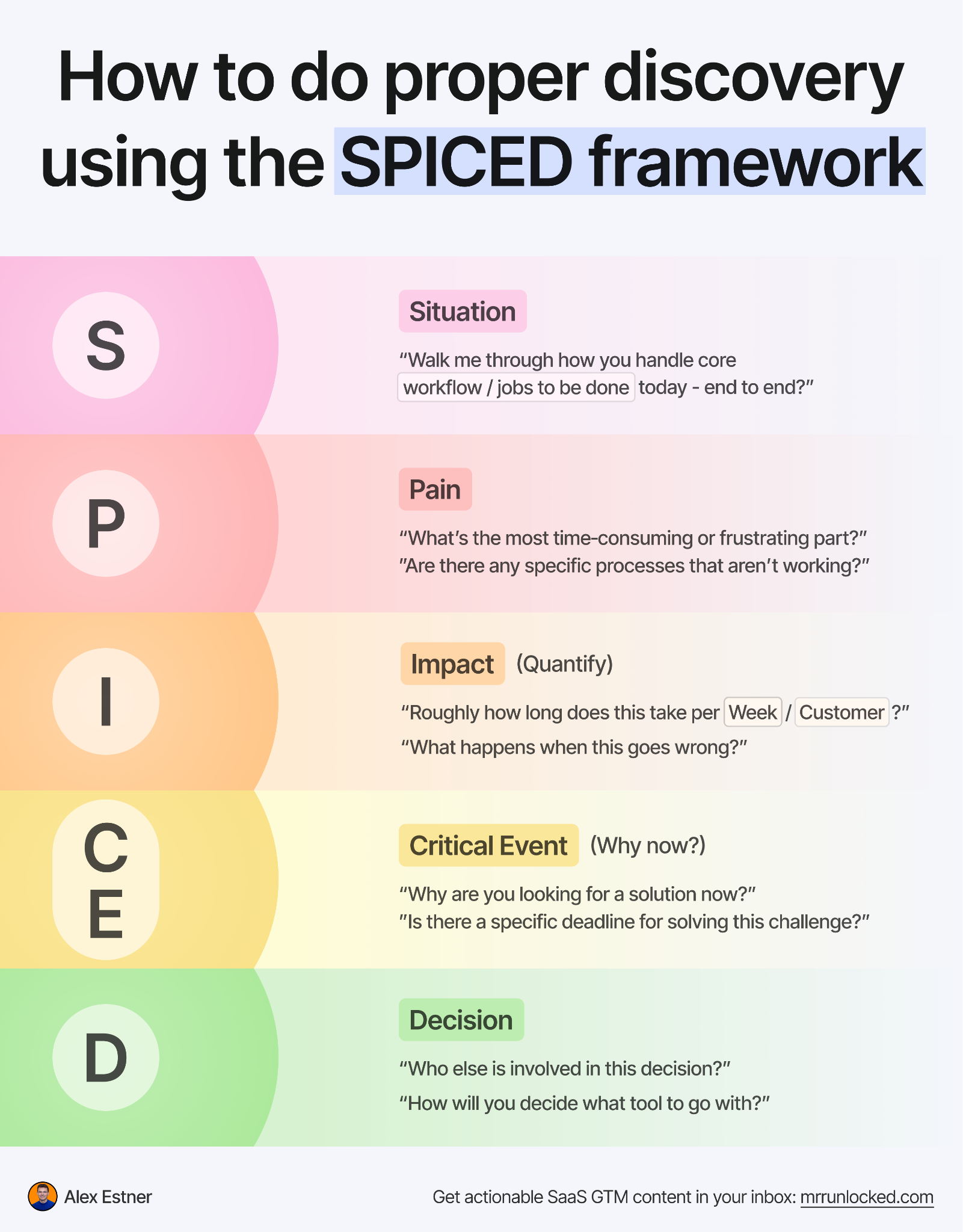
By the time CS does the kickoff, nobody remembers why the customer bought.
The fix isn’t discipline. It’s a system.
Remember: SPICED is a sales methodology, not a meeting or discovery framework. It’s the backbone across the full sales process.
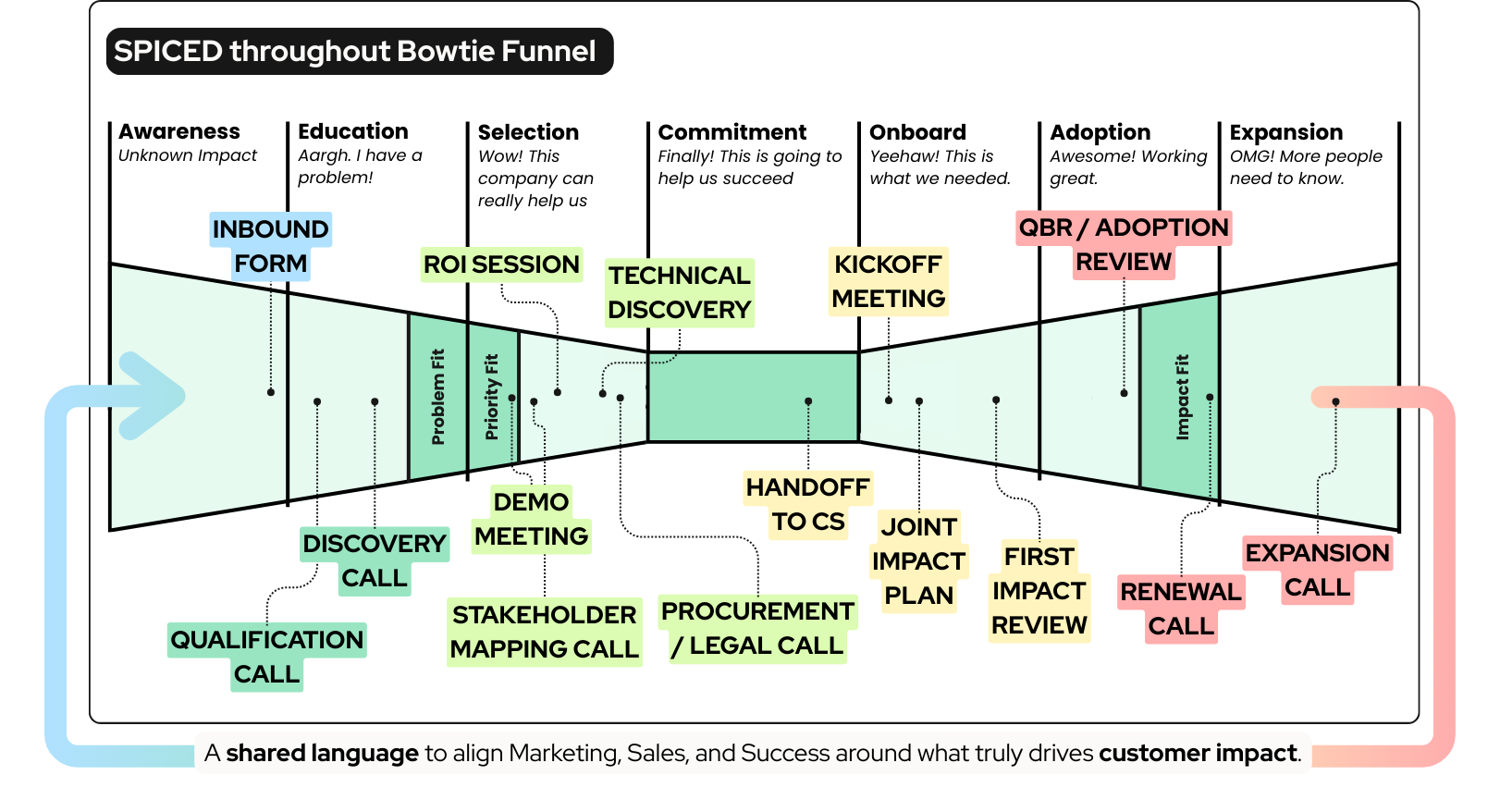
Meaning:
Discovery → uncover SPICED
Demo → validate SPICED
Handoff → transfer SPICED
Kickoff → reconfirm SPICED
Here’s how to make SPICED stick across your critical meetings, using Granola as your information layer.
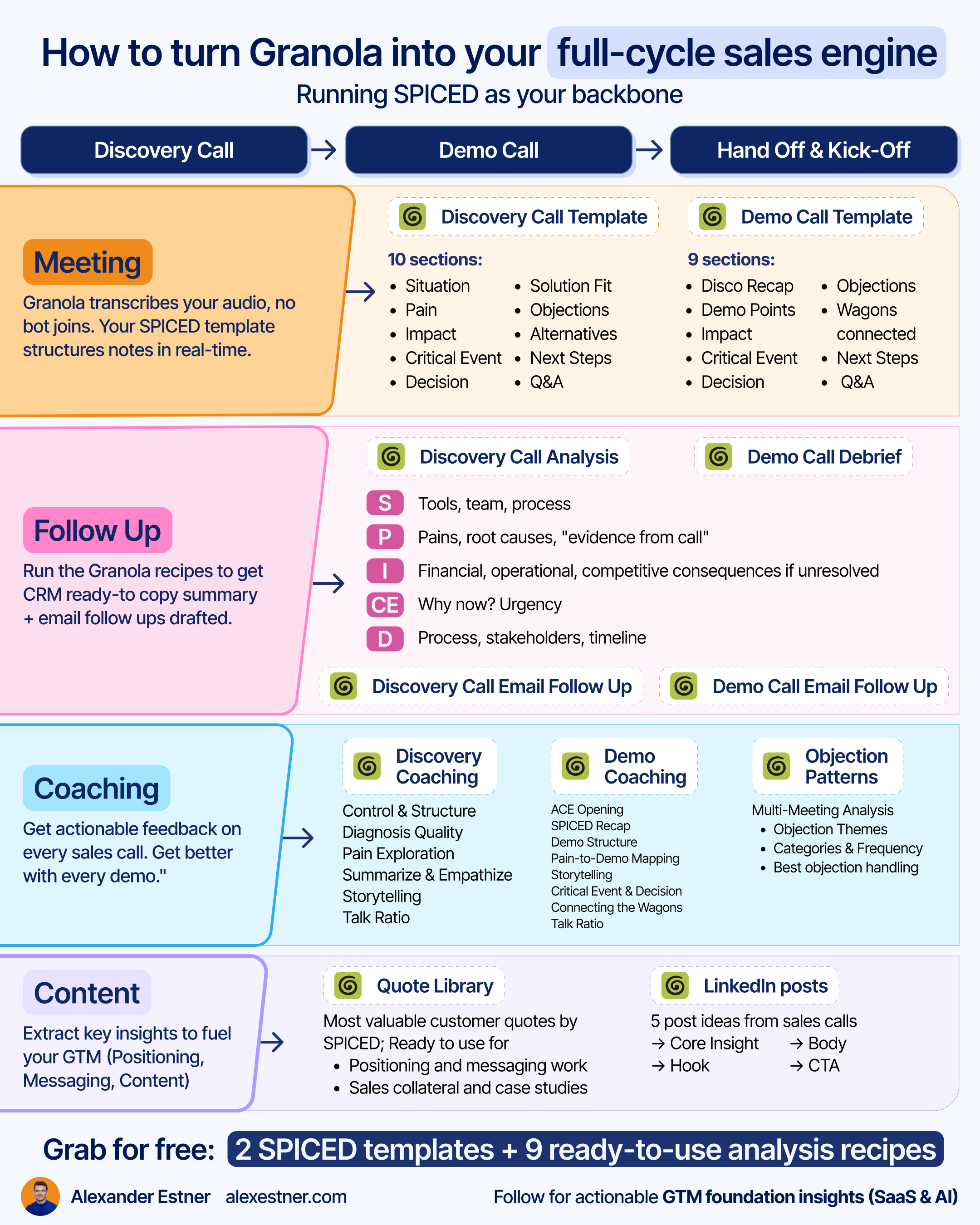
Instead of getting just a transcript of your call, each template produces a structured call summary you can paste straight into your CRM (in SPICED style).
Below you will find 2 templates:
Discovery Call SPICED Template
Demo Call SPICED Template
With those 2 templates applied to your sales calls, you will:
✅ collect better structured insights about your customers
✅ feed your CRM with richer information
✅ write better email follow-ups & optimize your sales process
✅ understand your ICP much better
✅ optimize your positioning and messaging
✅ write better (LinkedIn) content
✅ write better outbound messages
SPICED Meeting Template for Discovery Call
Copy and paste the text below into your Granola Template.
Meeting Context
This was a discovery call with a potential customer. The goal is to diagnose their situation before prescribing any solution. I need a structured SPICED summary that captures what I learned, what’s at stake, and what happens next. Pull specific figures, quotes, and timelines. Focus on what they said, not what I said. Flag gaps where key SPICED elements weren’t uncovered.
Your job
You are my sales assistant and sales expert (SPICED expert), and are responsible for summarizing my prospect and customer calls.
Analyze the call transcript and produce a clear, structured summary following the SPICED format below.
Instructions
1. Extract only information that is explicitly stated or strongly implied in the conversation.
2. Use concise bullet points, not paragraphs.
3. If information is missing, write “Not mentioned” rather than guessing.
4. Prioritize customer statements over seller assumptions.
5. Capture quantified details (numbers, timelines, budgets, KPIs) whenever possible.
6. Highlight important quotes from the customer when useful.
Sections
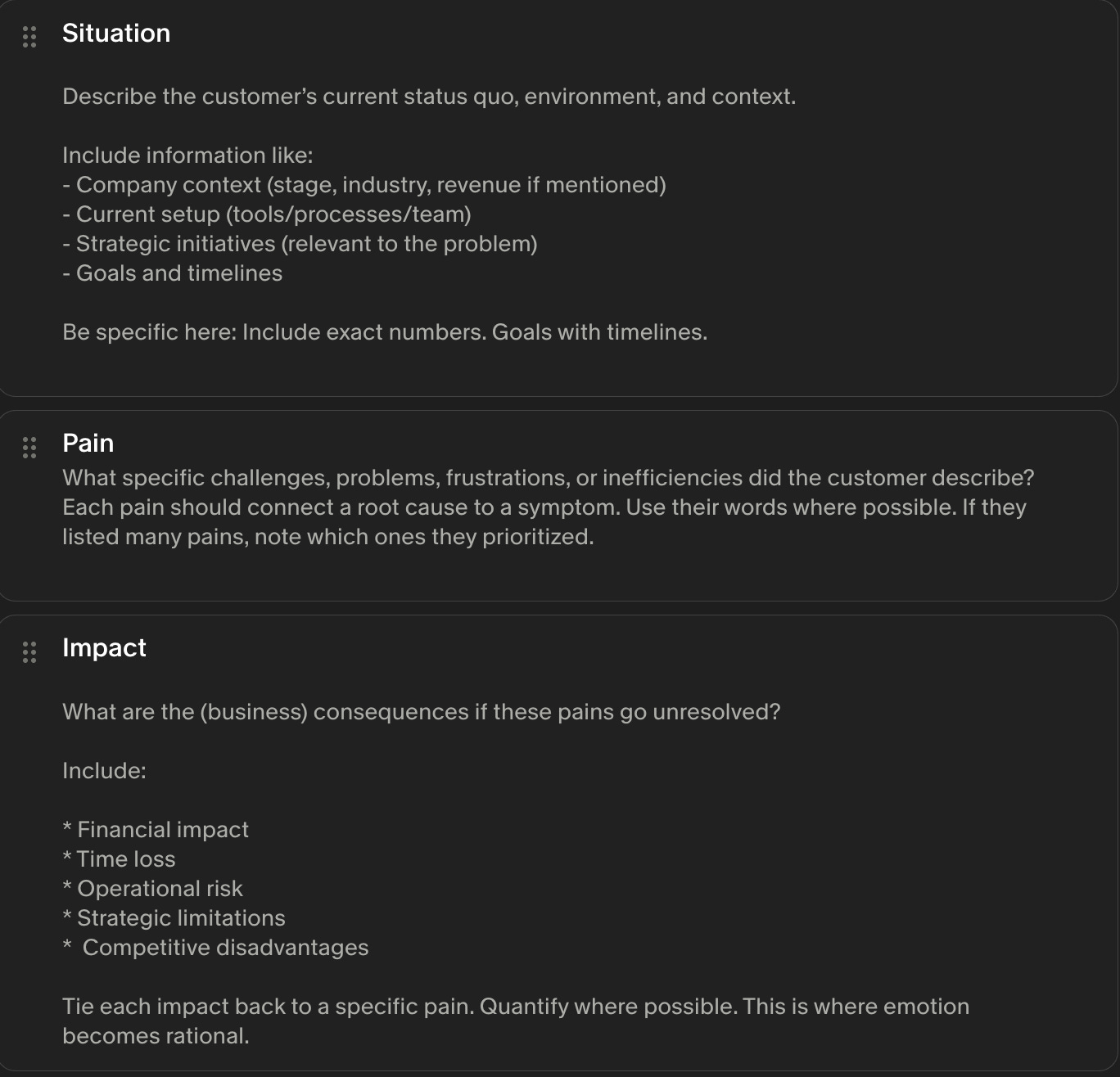
Section 1 = Situation
Describe the customer’s current status quo, environment, and context.
Include information like:
Company context (stage, industry, revenue if mentioned)
Current setup (tools/processes/team)
Strategic initiatives (relevant to the problem)
Goals and timelines
[insert any specific criteria that are relevant to you]
Be specific here: Include exact numbers. Goals with timelines.
Section 2 = Pain
What specific challenges, problems, frustrations, or inefficiencies did the customer describe?
Each pain should connect a root cause to a symptom. Use their words where possible. If they listed many pains, note which ones they prioritized.
Section 3 = Impact
What are the (business) consequences if these pains go unresolved?
Include:
Financial impact,
Time loss,
Operational risk,
Strategic limitations,
and competitive disadvantages.
Tie each impact back to a specific pain. Quantify where possible. This is where emotion becomes rational.
Section 4 = Critical Event
Is there a deadline or triggering event driving urgency? Examples: Contract renewal, Product launch, Budget cycle, Leadership mandate
The forcing function creating urgency. Include the timeline AND what’s at stake if they miss it. If no critical event was discussed, flag that as a gap.
Section 5 = Decision
Process: How will the buying decision be made? Include timelines (if mentioned), and Procurement process, and budget information.
Stakeholders: Who was on the call? Who else is involved? Influence vs authority. Be specific on Champion Signals, Decision maker(s), Influencers
Criteria: What criteria matter to them in evaluating a solution or partner? Constraints or preferences are shaping the decision.
Section 6 = Solution Fit
Honest assessment if our product is a good fit for them. Capture any specific advice, frameworks, or strategic direction shared during the call. Include the substance of what was recommended, not just that advice was given.
Section 7 = Objections & Concerns
Potential blockers or concerns.
Each objection with context and how it was addressed or left open. Mark each as resolved, partially addressed, or open.
Section 8 = Competitors & Alternatives
Who else are they considering instead of us? Other vendors, hiring, building in-house, or doing nothing. Not their market competitors. If not discussed, say so.
Section 9 = Next Steps & Action Items
Concrete follow-up actions agreed during the call.
Split into what I committed to do (with specifics and resource names) and what they committed to do (with a timeline). Every item must be concrete and assignable.
Format: Action — Owner — Deadline
Example:
* Send pricing proposal — Sales — Friday
* Schedule technical demo — Customer — Next week
Section 10 = Q&A Reference
Questions: they asked, and the full substance of my answers. Questions I asked and their specific answers. This section should be useful as a standalone reference.
Here’s how this looks inside your Granola account.
SPICED Meeting Template for Demo Call
Meeting Context
This was a demo or prescribe call following a previous discovery conversation. The goal was to recap known pains, then show how specific solutions address each one, establishing impact after each demo point. I need a summary that tracks what landed, what didn’t, and where the deal stands. Pull specific reactions, quotes, and commitments. Focus on what they said, not what I showed.
Your job
You are my sales assistant and sales expert (SPICED expert), and are responsible for summarizing my prospect and customer calls.
Analyze the call transcript and produce a clear, structured summary following the SPICED format below.
Instructions
1. Extract only information that is explicitly stated or strongly implied in the conversation.
2. Use concise bullet points, not paragraphs.
3. If information is missing, write “Not mentioned” rather than guessing.
4. Prioritize customer statements over seller assumptions.
5. Capture quantified details (numbers, timelines, budgets, KPIs) whenever possible.
6. Highlight important quotes from the customer when useful.
Sections
Discovery Recap
The situation and pain I referenced at the start of the call from the previous conversation. What context was carried forward to set the frame?
Demo Points & Reactions
For each topic demonstrated or prescribed: what was shown, their reaction, and whether the impact was established. Flag any pain from discovery that was NOT addressed in this demo.
What convinced them most (e.g. specific feature, capability, case study…)?
Impact Validated
Which business impacts did they confirm or acknowledge? Use their words. Note any impact questions that fell flat or weren’t asked. This is the most important section.
Critical Event
Timeline confirmed or updated from discovery. What happens if they miss it?
Decision (Process, Stakeholders, Criteria)
Summarize how they will make a decision (who, when).
What criteria emerged? What matters most to them. Who else needs to be involved? Steps to a decision. Any new stakeholders surfaced during the call.
Objections & Concerns
Each with context and how addressed. Mark as resolved, partially addressed, or open. Note anything new that didn’t come up in discovery.
Wagons Connected
Did the call close by referencing the opening end goal? Was a next meeting booked? Who else was invited? What outcome was set for the next conversation?
Next Steps & Action Items
Concrete follow-up actions agreed during the call.
What I committed to do and what they committed to do, with a timeline. Every item is concrete and assignable.
Q&A Reference
Their questions with my full answers. My questions with their specific answers.
To make it easier for you, we also created 9 SPICED recipes.
9 SPICED Recipes for Granola
Now, let’s have a look at some prompts (recipes) that help you get deeper insights about your customers and calls.

→ Discovery Call Analysis
→ Discovery Call Coaching
→ Discovery Follow-Up Email
→ Demo Call Debrief
→ Demo Call Coaching
→ Post Demo Follow Up Email
→ Objection Patterns
→ Customer Quote Library
→ LinkedIn Post Ideas
Each recipe includes the name, type (single or multiple meeting), and the prompt to paste.
Get access to the Full SPICED Guide, including all templates + recipes.

Summary
Most teams already have the conversations. They just don’t use them.
SPICED gives you the structure.
Granola makes it stick.
The combination turns every call into:
better deals
better positioning
better content
better decisions
Not because you worked more.
Because you stopped losing the information you already had.
👉 Get the full SPICED guide (all templates + recipes).
Use it on your next 5 calls.
You’ll immediately see where your deals break.
And where they actually close.
See you in 2 weeks.
3 ways I help founders build a strong GTM foundation 👇
If you’re somewhere between €0 → €1M ARR, I can help you with your GTM.
1️⃣ Free GTM Foundation Library
→ 50+ resources (guides, templates, frameworks)
2️⃣ GTM Audit
→ 360° assessment + 6-month action plan: Your GTM Blindspots revealed
3️⃣ 1:1 GTM Advisory
→ Work directly with me to build your GTM
Love this. I am a SPICED fan. 🤩