


Hey - it’s Alex!
Today, we’ll cover 10 quick GTM fixes that you can ship this week - no new playbooks, no new channels, just foundational execution that reduces noise.
In case you missed the last 3 episodes:
✅ Homepage Teardown: What 6 Top SaaS Companies get Right (and Wrong)
✅ Insights from 15+ GTM audits
✅ The Best of MRR Unlocked 2025
A quick word from our sponsors
📢 Attio — Your CRM wasn't built for how fast you need to move

Attio is the AI CRM that flexes with your GTM strategy, not the other way round. Connect your email and calendar, and Attio instantly builds your CRM.
Then Ask Attio anything:
Ask “What’s the latest on this deal?” and get comprehensive answers with suggested next steps
Prep for calls in seconds, with context from across your entire business
Keep your pipeline up-to-date automatically
Ready to move faster?
👉 Reach 27.000+ SaaS operators with sponsored content. Sponsor the next newsletter.
Let’s get into it. 👇
1) ICP & ANTI ICP Bullet list
Ask yourself:
Can you describe your ICP in 5 short bullet points?
What are the disqualifiers that define your ANTI ICP?
If you can’t describe your ICP and Anti ICP in 5 bullets, your GTM execution gets fluffy (noisy pipeline, long sales cycles, low demo win rate) - that’s the opposite of what you want to achieve on your 0—> 1€ million ARR journey.
Remember, ICP is a combination of:
Ideal Company (Firmographics, Technographics, other relevant criteria)
Ideal Persona (Job Title, Department, Pain/Challenges)
Intent Signals (How do you know they face the problem your product solves)
The same is true for your ANTI ICP. This is a list of Disqualifiers.
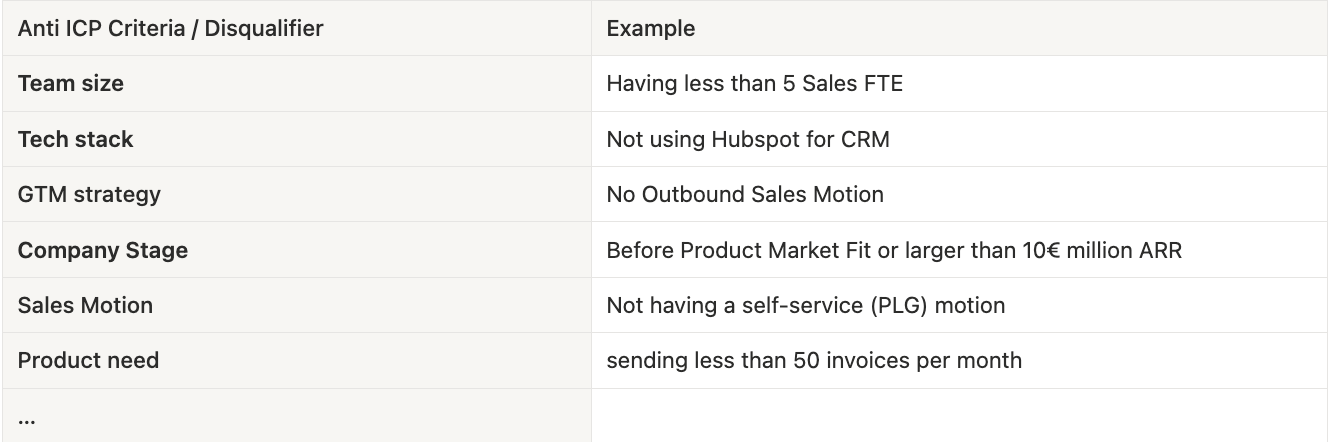
If you don’t know who you should not sell to, your pipeline will always be noisy.
P.S. Don’t stop with documenting your ICP, enforce it in your GTM.

Need support? Check out my ICP Framework or get early access to my brand new ICP Framework 2026.
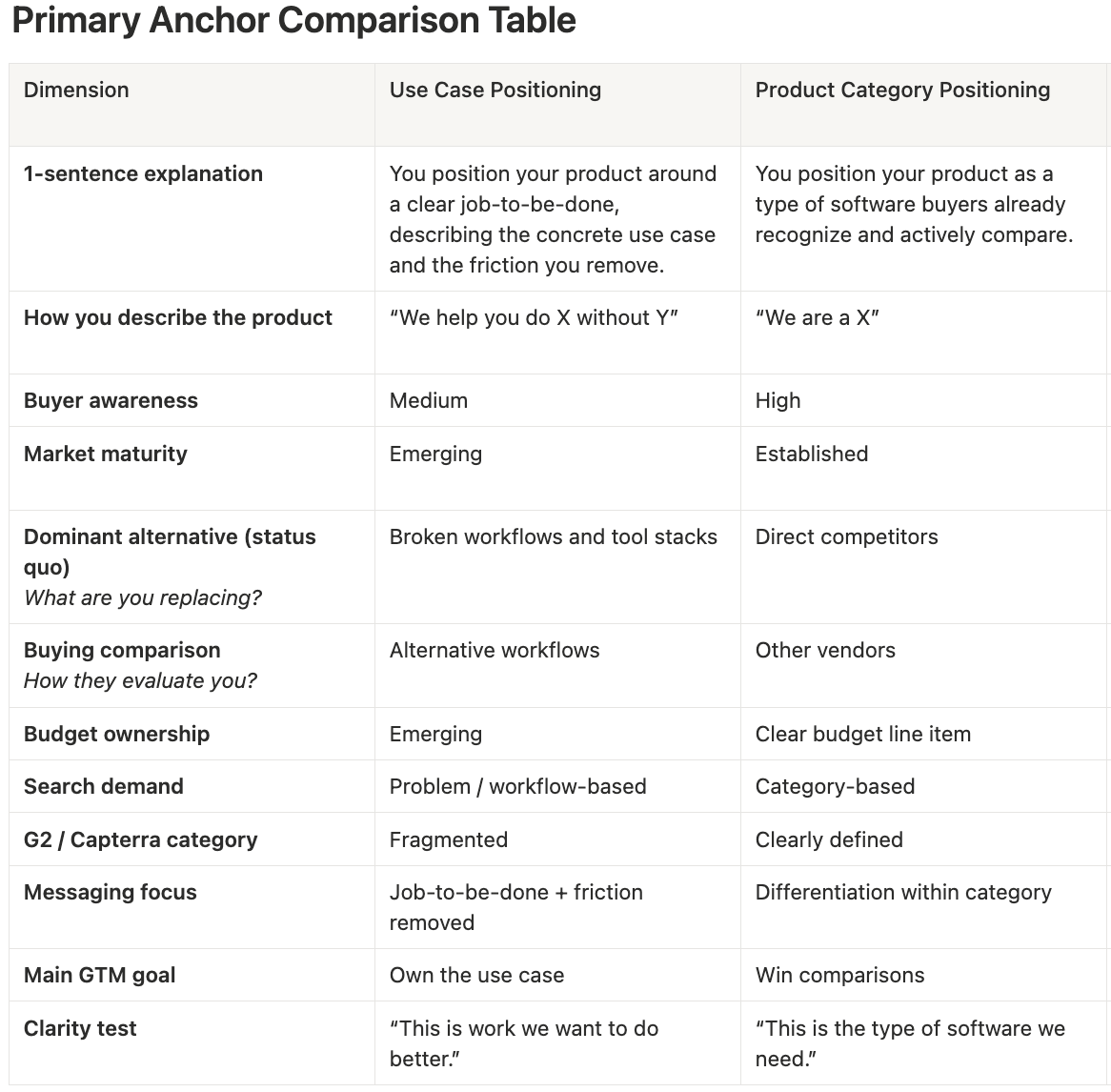
2) Decide on your primary positioning anchor (product category or use case)
Ask yourself:
Do buyers immediately understand what your product is?
Or do you need 5 sentences to explain what you do?
Before you differentiate, you must anchor.
Decide explicitly. Are you leading with:
A product category?
A specific use case?
One primary anchor. Not multiple.
If buyers don’t know what to compare you against, they are confused.

Pick one primary anchor and reflect it consistently:
Homepage. LinkedIn. Demo intro. Sales deck.
P.S. Here is a preview of my upcoming Positioning Guide, including how to choose the right primary anchor.
3) Kill one channel (if you’re in Focus mode)
Ask yourself:
Are you running multiple channels “a bit”?
Or are you executing one deeply?
If you’re early-stage and spreading across 4 channels, you’re likely generating weak signal everywhere.
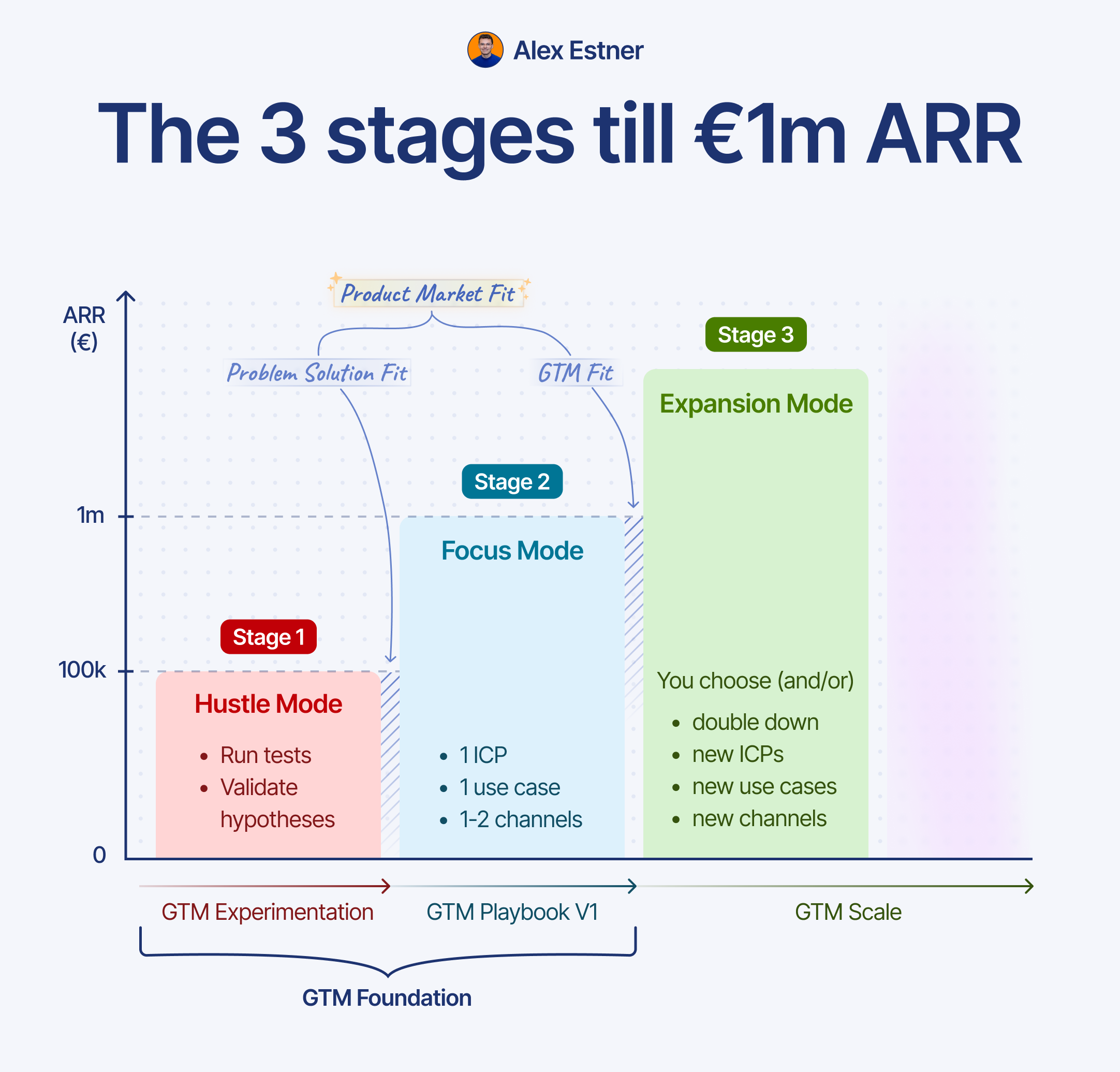
Focus mode means:
Pause the weakest channel
Reallocate time and energy to the strongest signal
4) Add a “How did you hear about us” in your Demo / Sign Up Flow
Ask yourself:
Do you actually know where qualified pipeline comes from?
Add a required “How did you hear about us?” field. Also make it part of your demo calls to ask them (again).
Review it weekly.
This gives you more confidence in your GTM channels.
P.S. This is a great use case for the new Attio Ask feature.
5) Share your best case studies
Ask yourself:
Do you actively use your best case studies?
A lot of times, when I work with founders, I see they have great case studies but don’t use them. The case studies are ‘hidden’ on sub-pages on the website, and that’s it.
Use your case studies effectively:
Make them part of your sales emails
Add ‘case studies/customers’ in your website navigation bar
Have a ‘case study’ section on your homepage
Add their stories to your sales deck
Add them to your LinkedIn profile (featured section)
6) Revamp your LinkedIn profile
Ask yourself:
Does your LinkedIn clearly communicate what we do and who we serve?
If not, it’s time to revamp your profile: Headline, Banner, Featured Section

7) Ask your (best) customers for referrals / warm intros
Ask yourself:
When was the last time you proactively asked for a referral?
I do believe you can use every touchpoint with a prospect/customer to get warm intros. It depends on how you ask for it.
Step 1: Prepare for the call
Scan their network for ICP-fits and create a shortlist. The goal is to have a list of 3-5 contacts + companies that they might know (with a high probability).
Step 2: Ask open question
“Who are 2-3 other companies/people you can think of who can benefit from X as well?”
“Who do you think could benefit from our product?”
Step 3: If no response/ they don’t know anyone, be prepared and say:
“No worries, I saw that you are connected with X and Y. I believe they might be a good fit for us. How is your connection with them?”
“I had a quick look at your LinkedIn network before our call, and I saw that you’re connected to X, Y, Z, who I believe would benefit a lot from our product. How is your connection with them?”
Step 4: Make it easy for them to make the intro (asap):
Have an email template they can use or suggest a LinkedIn group chat.
8) Track lost reasons systematically
Ask yourself:
Do you have a required lost reason field?
Do you systematically analyze why deals are lost?
If not, add a required “Lost Reason” field in CRM.
I recommend tracking 7 lost reasons👇
1️⃣ Decided for competition
2️⃣ Status quo sufficient
3️⃣ Decision delayed
4️⃣ Too expensive / no budget
5️⃣ missing key features
6️⃣ no response
7️⃣ other
9) Do you have a hard criterion for “when to open” and “when to close” a deal?
Ask yourself:
Do you follow a clear rule when you open and close a deal?
When exactly does a lead qualify as an opportunity?
When do you close-lost?
A common way (for a sales-led motion) is to open a deal for SQLs, meaning they have:
✅ ICP Fit
✅ Product-Usecase Fit
✅ Urgency to buy
You need to find your ‘best sales process’ and follow it consistently.
Also, have a rule when you close lost stalled deals. You don’t want old, stalled deals manipulating your sales pipeline forecast.
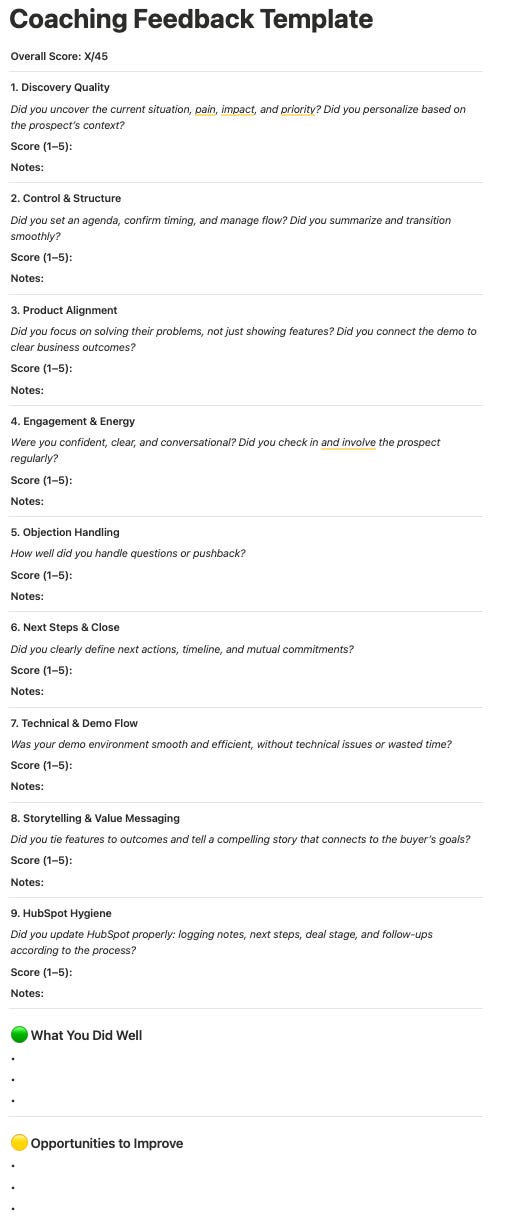
10) Review your last 3 demo calls and challenge yourself
Ask yourself:
How deep was your discovery?
Do you really know their status quo and pain points?
Do you know their decision process and all stakeholders?
Can you clearly articulate the committed next steps (who, when, what)?
Was your demo more of a product tour than a sales conversation?
So sit down and watch your last recordings.
Feel free to use the structure of my Coaching Feedback Template 👇
None of these are growth hacks. They are GTM foundations.
So now, sit down and add them to your next week to do list.
If you implement even half of these, you’ll improve your GTM execution.
Okay, that’s it for today.
See you in 2 weeks.
P.S. Respond to this email and let me know how you executed them.
3 ways I help founders build a strong GTM foundation 👇
1️⃣ Use my free GTM library with 50+ free resources (guides, templates, workbooks, and tools) to build a strong GTM foundation (helped 5000+ SaaS leaders)
2️⃣ Get a 360° GTM audit of your status quo + a custom 6-month action plan
3️⃣ Work 1-on-1 with me - GTM Advisory for SaaS founders from €0 to €1 million ARR