


Hey – it’s Alex 👋
GTM can get complicated quickly.
ICP frameworks. Positioning exercises. Pricing. Dozens of GTM channels. Sales methodologies.
But if you’re trying to get from €0 → €1M ARR, you don’t need 100 frameworks.
You need to get a few fundamentals right.
So I went through my GTM content and picked 9 infographics I’d give to every early-stage SaaS founder.
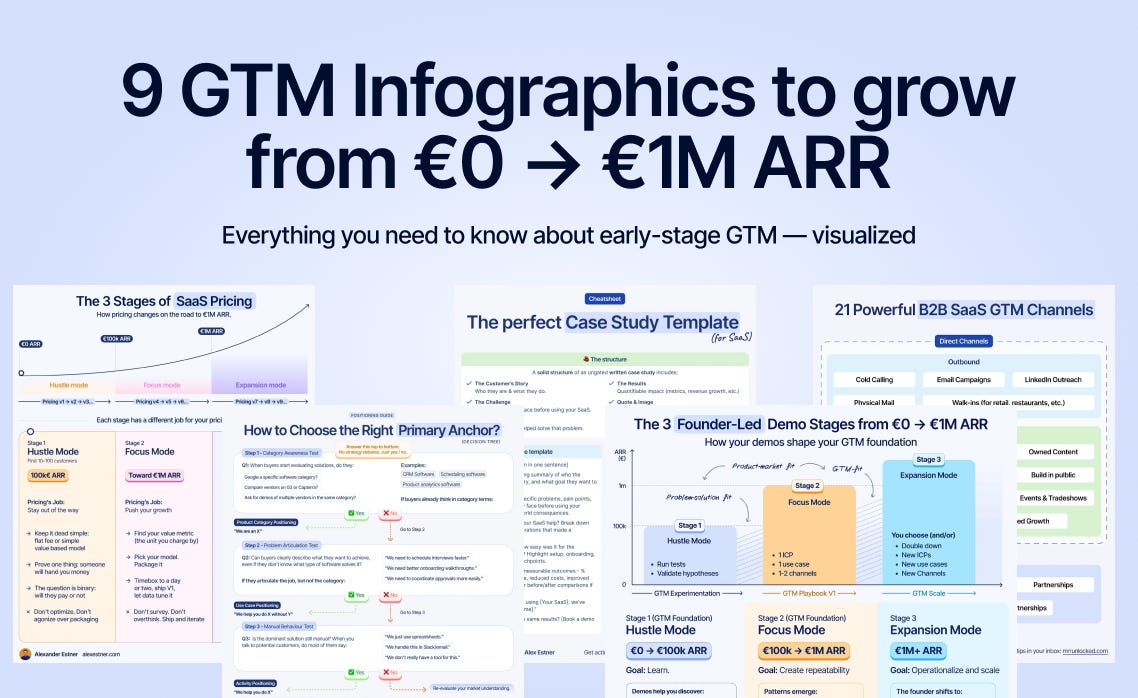
Together, they cover the journey from finding your ICP to building a repeatable GTM engine.
Let’s get into it.
In case you missed the last 3 episodes:
✅ One founder needs to own GTM
✅ 3 things you can ship today
✅ 10 GTM principles I recommend to every founder
This newsletter is sponsored by Landbot

Still deciding between building your AI agent in-house or paying for a platform?
Most teams compare the wrong numbers: the cost to build vs. the price of a license and skip the part that actually adds up: who maintains it, what happens when it breaks, and what it costs when nobody but you knows how it works.
Landbot's Build vs Buy assessment scores your setup in under 2 minutes and tells you exactly where you land: Build-fit, Hybrid-fit, or Buy-fit.
No pitch, no catch: for a lot of teams, the honest answer is "keep building."
1. Find your ICP
Infographic: From early to ideal customers
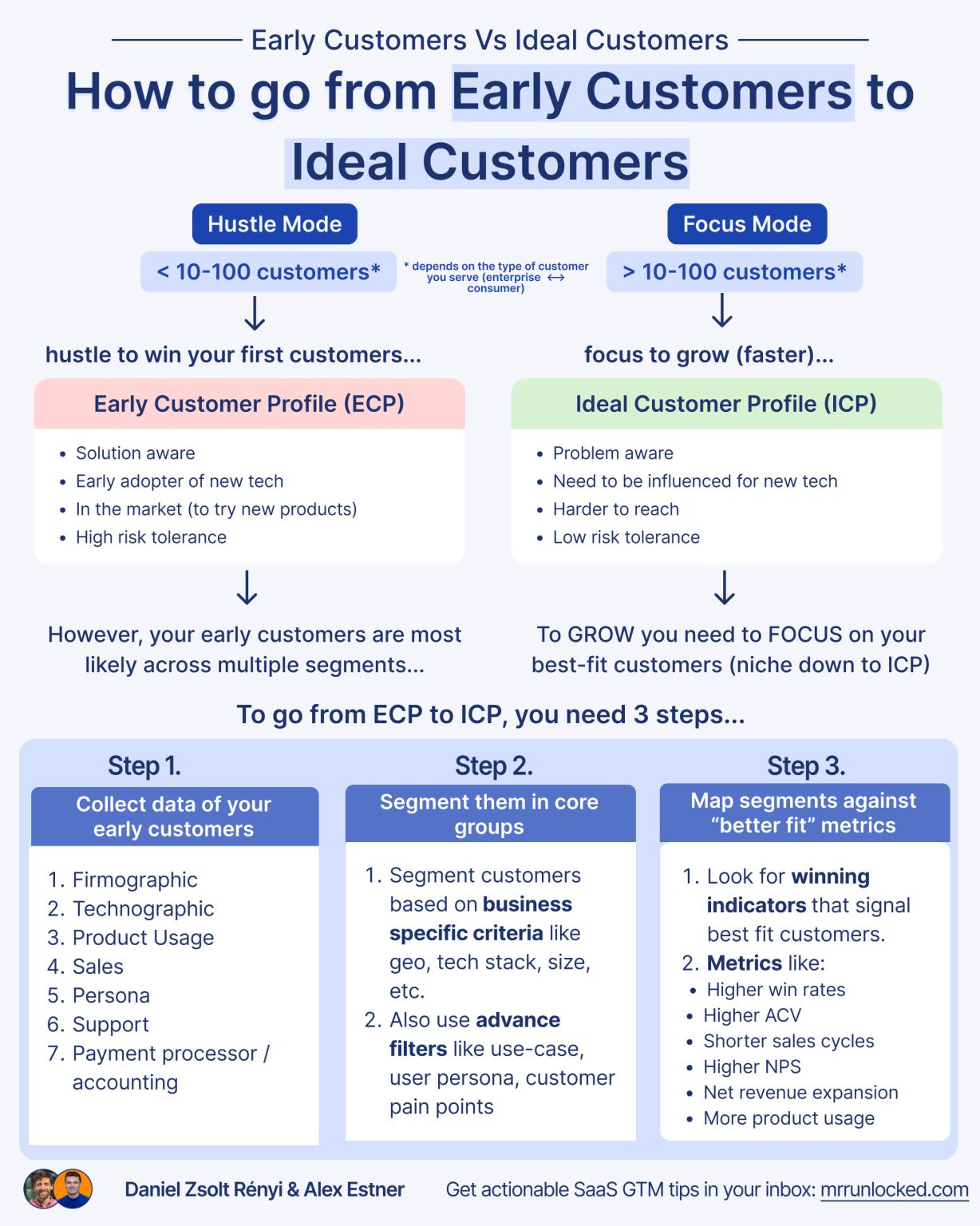
Your first customers aren’t necessarily your ideal customers.
Especially early on, you often take whoever is willing to pay.
That’s fine.
But as you get more customers, you need to figure out which ones you actually want more of.
Look at your existing customers and ask:
Who gets the most value?
Who has the strongest pain?
Who buys fastest?
Who is easiest to reach?
Who sticks around?
Use your early customers to identify patterns and gradually sharpen your ICP.
→ Action: Look at your best 5–10 customers and write down what they have in common.
2. Position your product
Infographic: Decision Tree: Choose the right positioning anchor
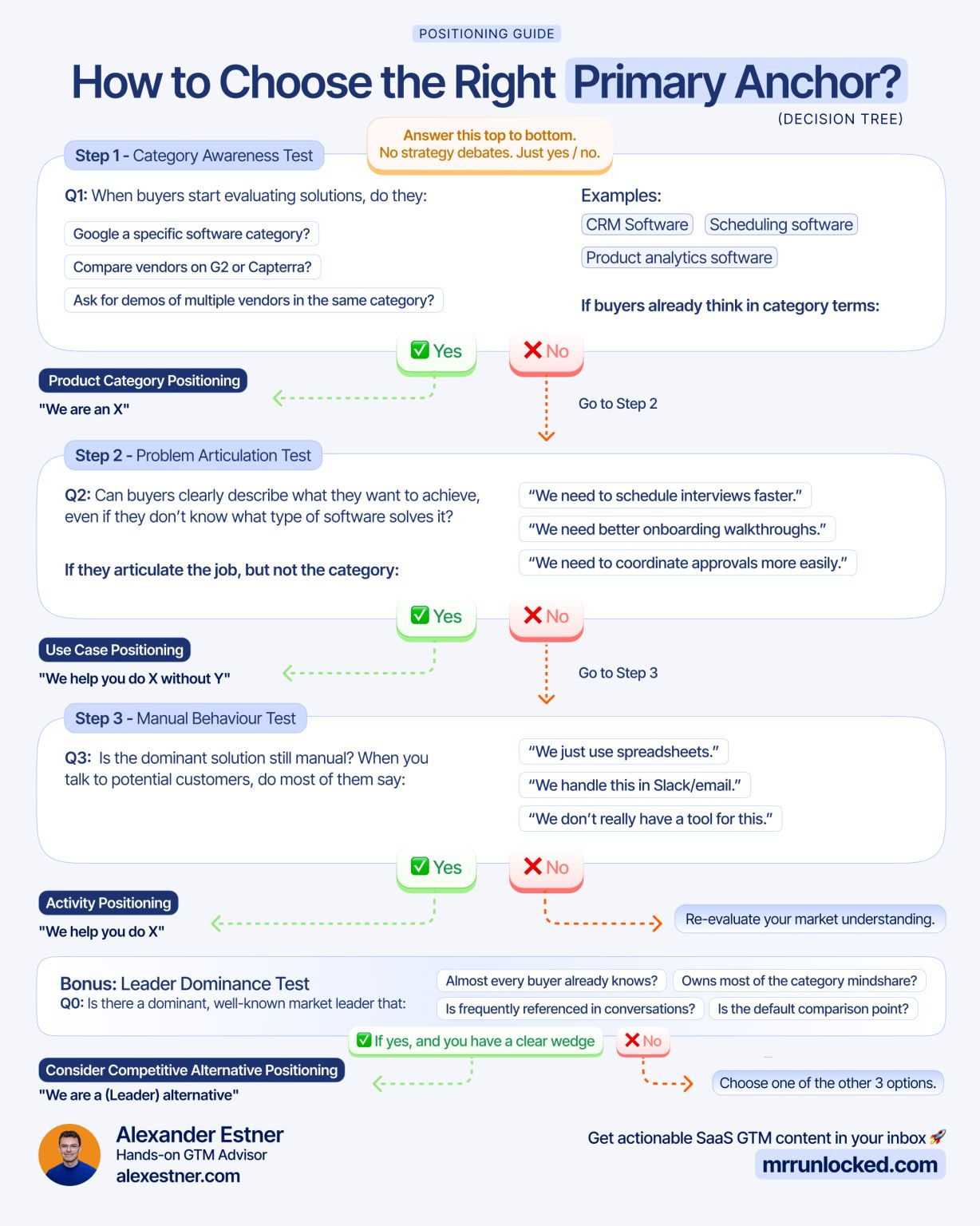
Once you know who you’re selling to, decide how you want them to think about your product.
And one of the biggest positioning questions is:
What should you anchor your product against?
An existing category?
A known competitor?
The status quo?
A completely new category?
Your positioning determines how prospects understand your product and what they compare you against.
→ Action: Ask yourself: What does my ICP currently compare us against when deciding whether to buy?
3. Nail your messaging
Infographic: Messaging Testing
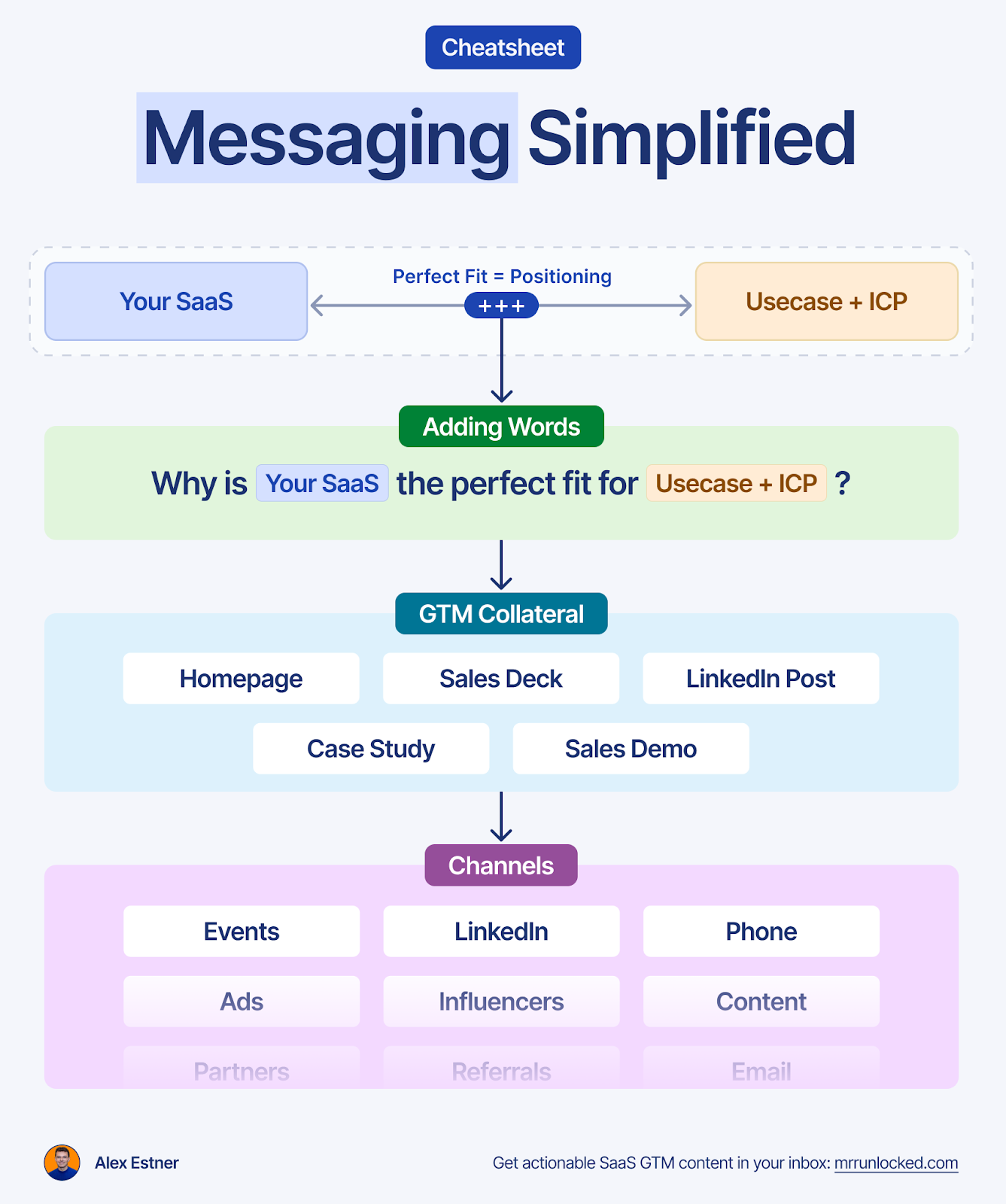
Once your positioning is clear, turn it into messaging your ICP actually understands.
I like to simplify messaging down to one question:
Why is your SaaS the perfect fit for this specific use case + ICP?
The answer becomes the foundation for your messaging.
And that messaging shouldn’t just live on your homepage.
It should be consistent across your:
Homepage
Sales deck
LinkedIn posts
Case studies
Sales demos
And eventually across every channel you use to reach your ICP.
The goal is to translate your positioning into a clear message and use it consistently everywhere.
Clarity > Clever.
→ Action: Use my SaaS messaging framework to finally get clear on what you're communicating.
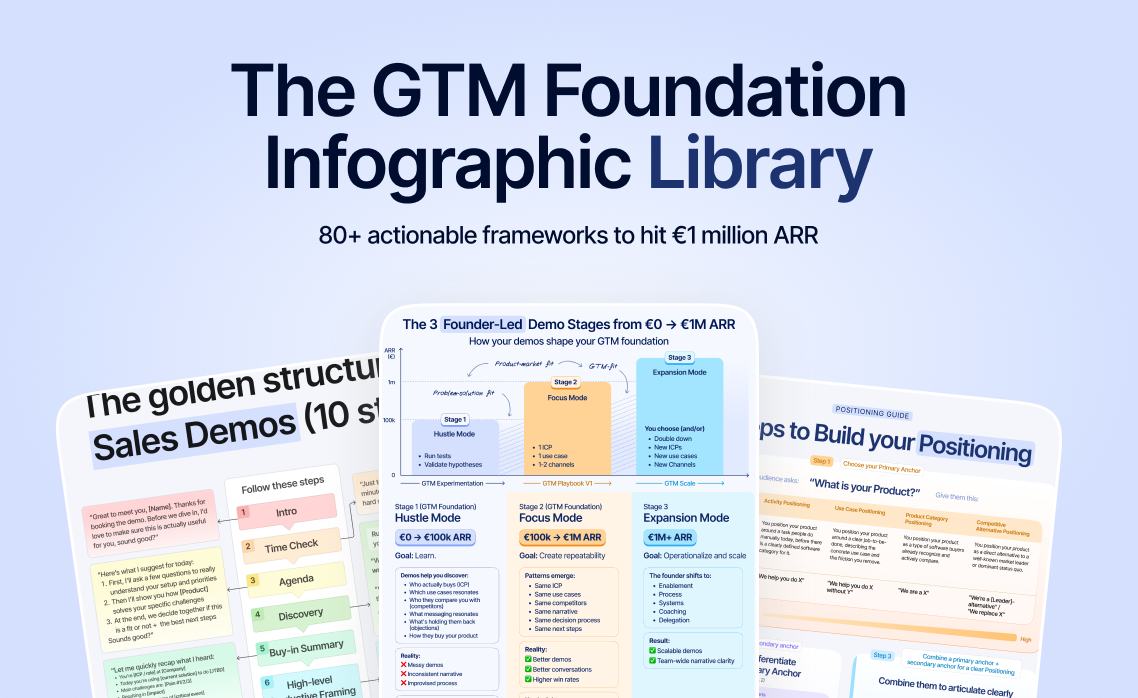
All my 100+ Infographics in one place - for free
4. Get your pricing right
Infographic: SaaS Pricing Simplified
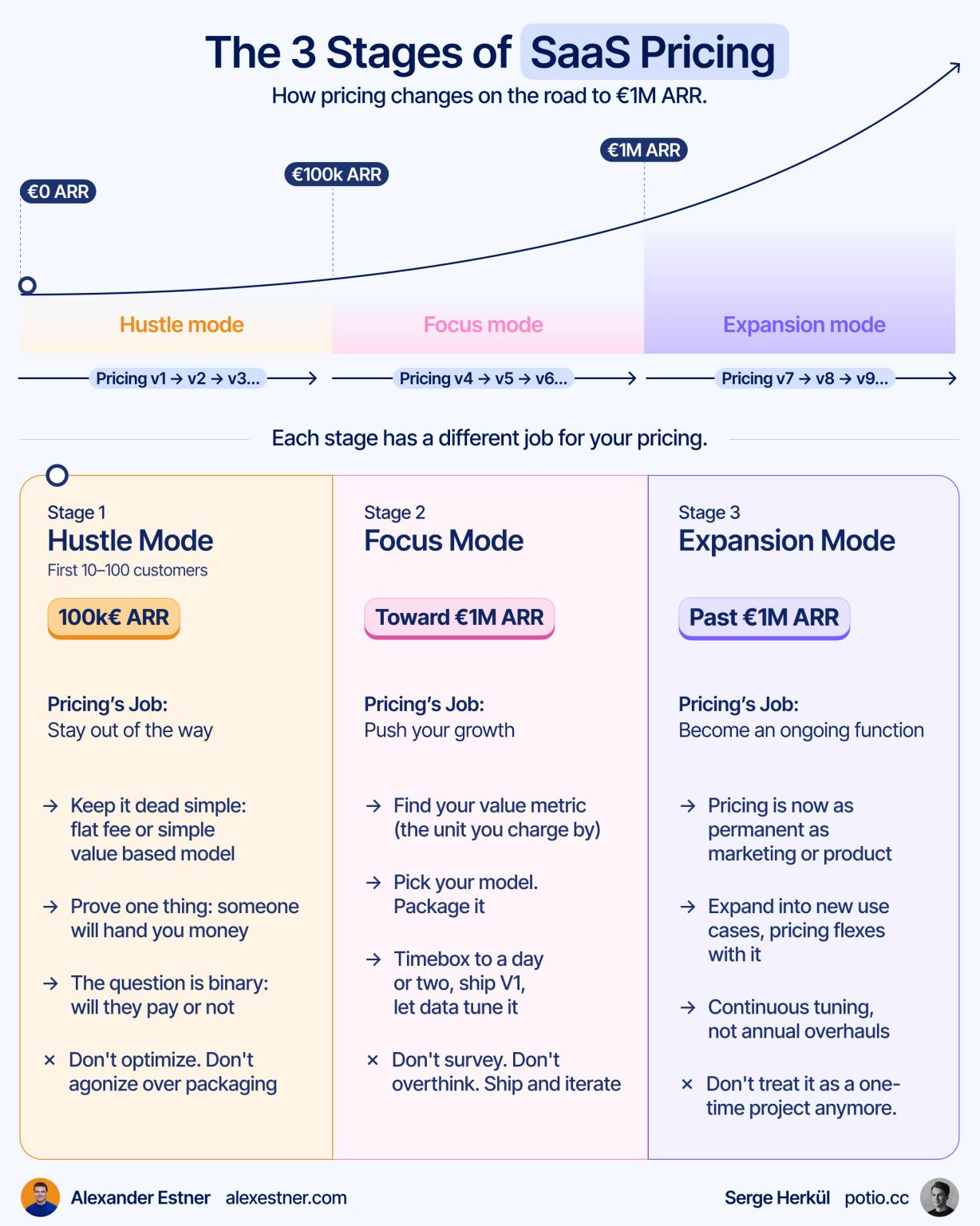
Pricing isn’t just about choosing €49 vs. €99.
Your pricing strategy includes:
Price point + Value metric + Packaging + Terms
And all four need to fit your ICP, positioning and sales motion.
→ Action: Don’t just ask “Are we too expensive?” Ask whether your entire pricing model matches how customers receive value.
5. Choose your GTM channel
Infographic: GTM Channels
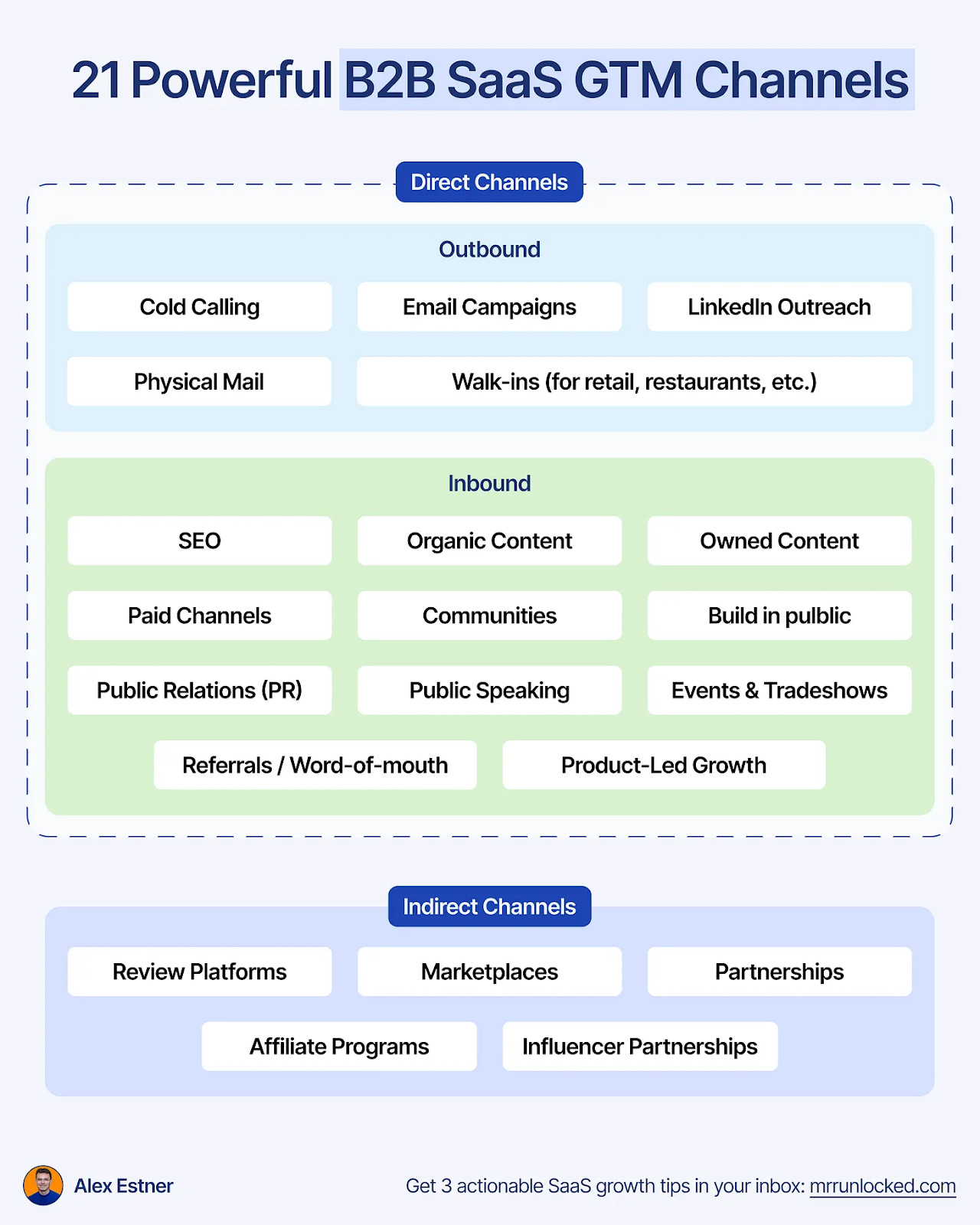
There are dozens of ways to acquire customers.
Outbound. Content. SEO and GEO. Partnerships. Communities. Events. Referrals.
The mistake is trying all of them at once.
Usually because founders copy what the big guys are doing.
Especially early on, you need to find one channel you can make work consistently.
Which channel makes sense depends on your ICP, ACV, buying process and where your customers spend their time.
→ Action: Pick one (or 2) primary GTM channels and give yourself enough time and volume to actually learn whether it works.
6. Run better demos
Infographic: Founder-Led Sales Demo Stages
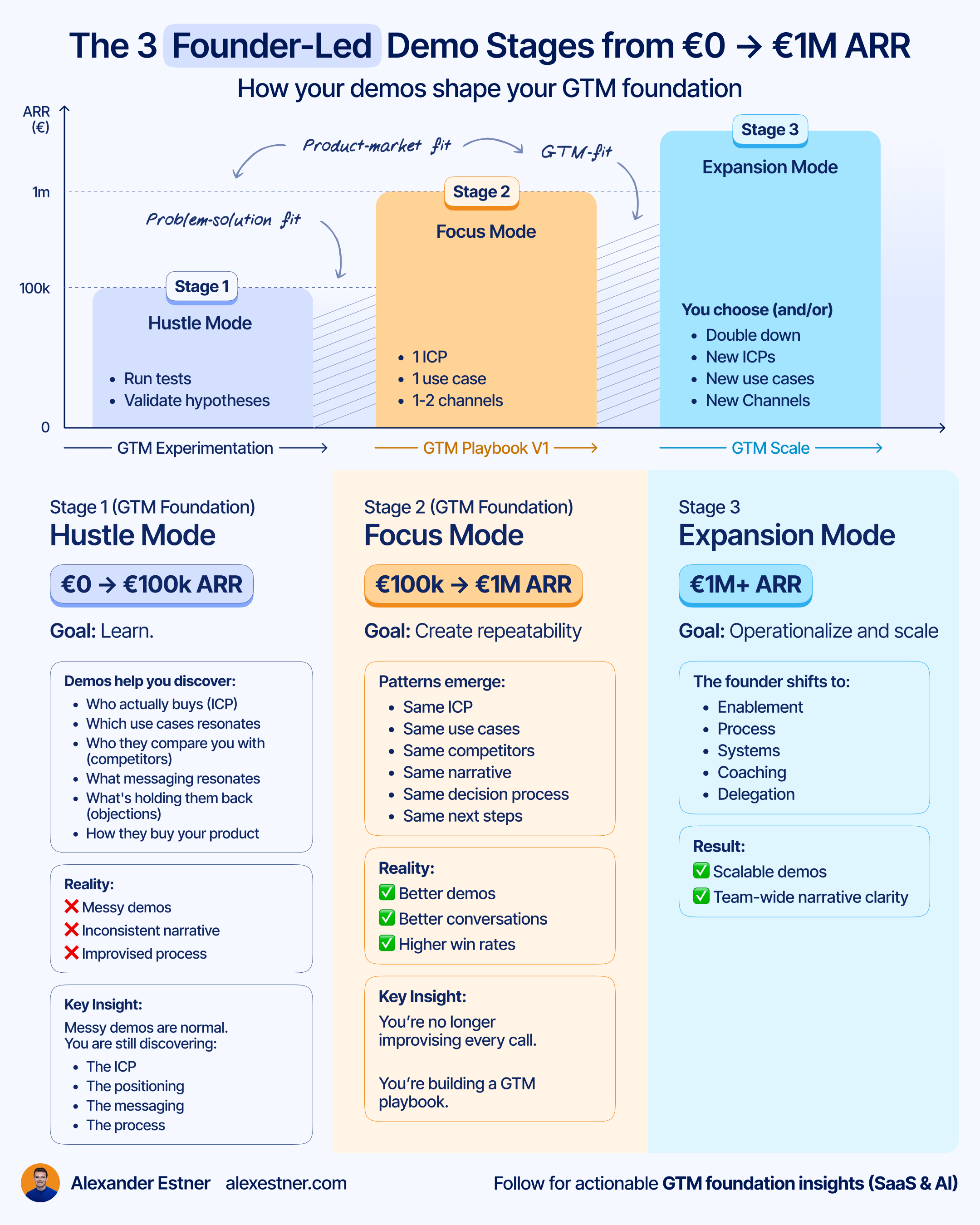
The goal isn’t to show prospects every feature you’ve built.
A good founder-led demo should connect:
Their problem → Your solution → The value they could get
That means understanding the prospect first, tailoring what you show and agreeing on a clear next step.
→ Action: Don’t make these 6 common demo mistakes, and you will do better demos than 90%.
Want to master your demos? Get my B2B Sales Demo Toolbox.
7. Build a repeatable sales process
Infographic: Define your sales process
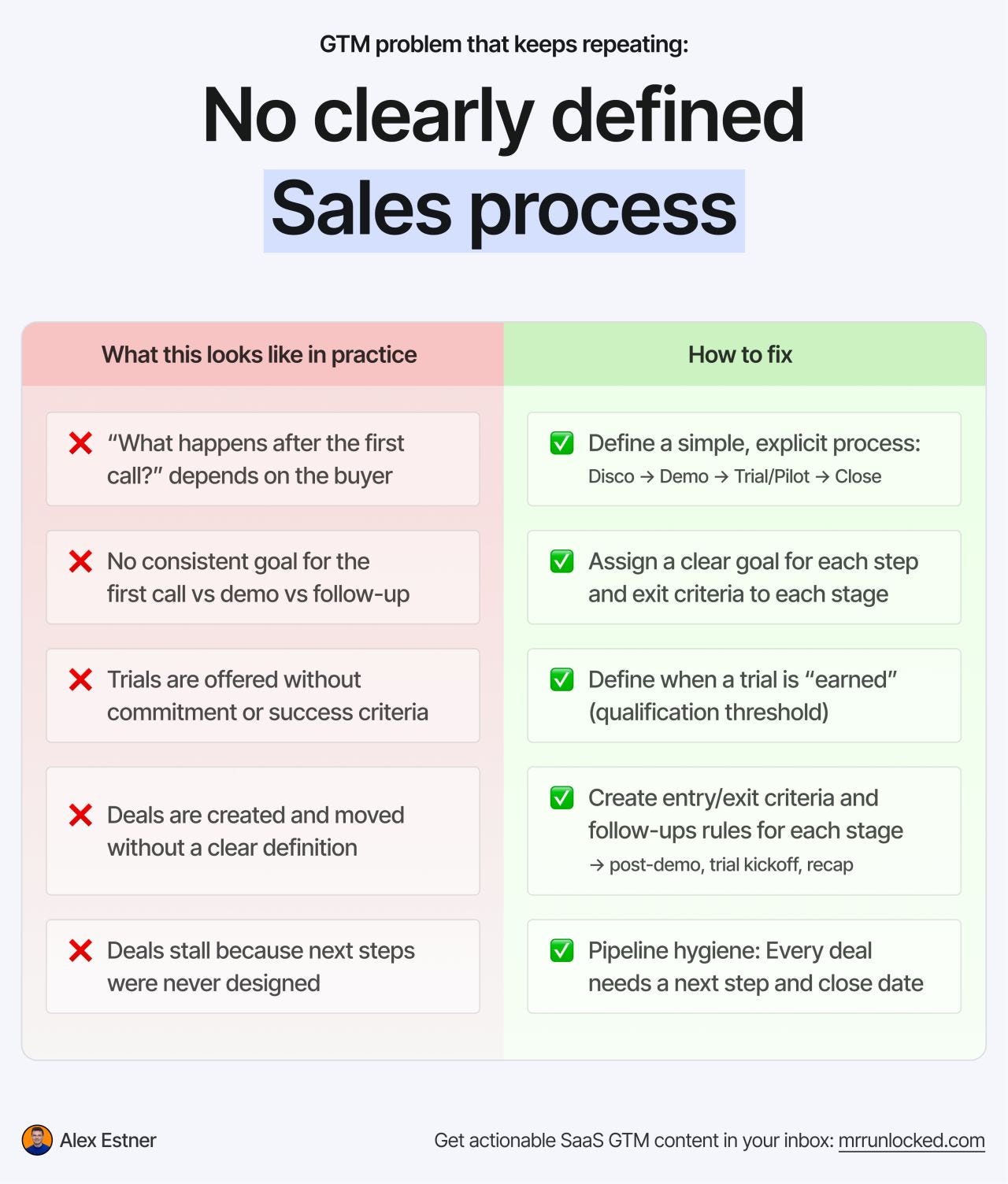
Founder-led sales often starts messy.
Every deal is different.
Different calls. Different follow-ups. Different next steps.
That’s normal at the beginning.
But eventually, you need to turn what works into a repeatable process.
For each stage, define:
What’s the goal?
What needs to happen?
What’s the exit criterion?
What’s the next step?
This might look like:
Discovery → Demo → Trial / Business Case → Close
It doesn’t need to be complicated.
It needs to be clear.
→ Action: Write your current sales process on one page and define one clear exit criterion for every stage.
8. Turn your first wins into social proof
Infographic: Case Study Template
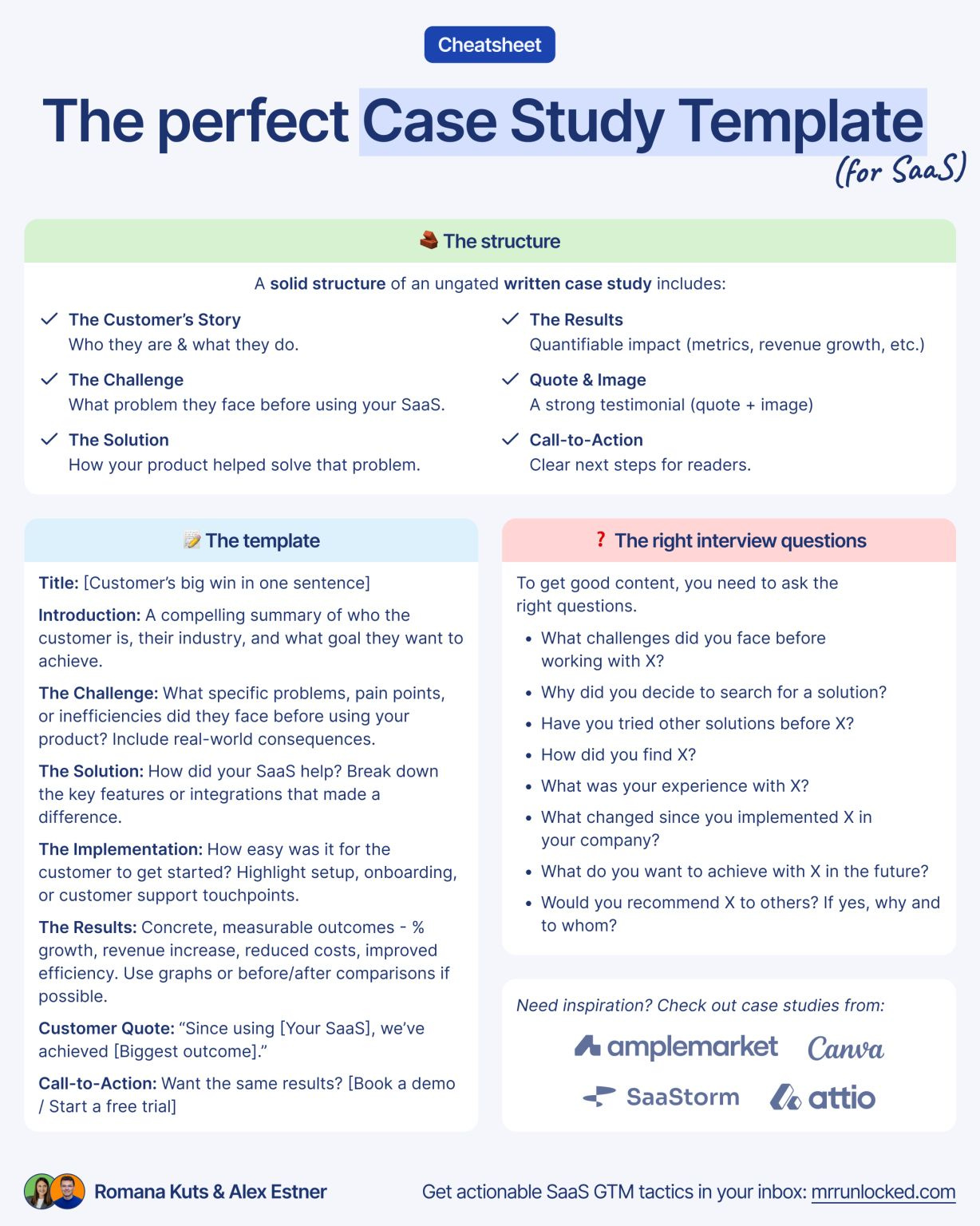
Your first happy customers should help you win your next customers.
A good case study tells a simple story:
Before → Problem → Solution → Result
Ideally with specific outcomes, numbers and quotes.
And don’t hide your case studies somewhere on your website.
Use them in outbound, sales calls, follow-ups, demos and proposals.
→ Action: Pick your 3 happiest customers and turn at least one into a proper case study.
9. Turn what works into a repeatable GTM engine
Infographic: Grow from 10 to 100 customers
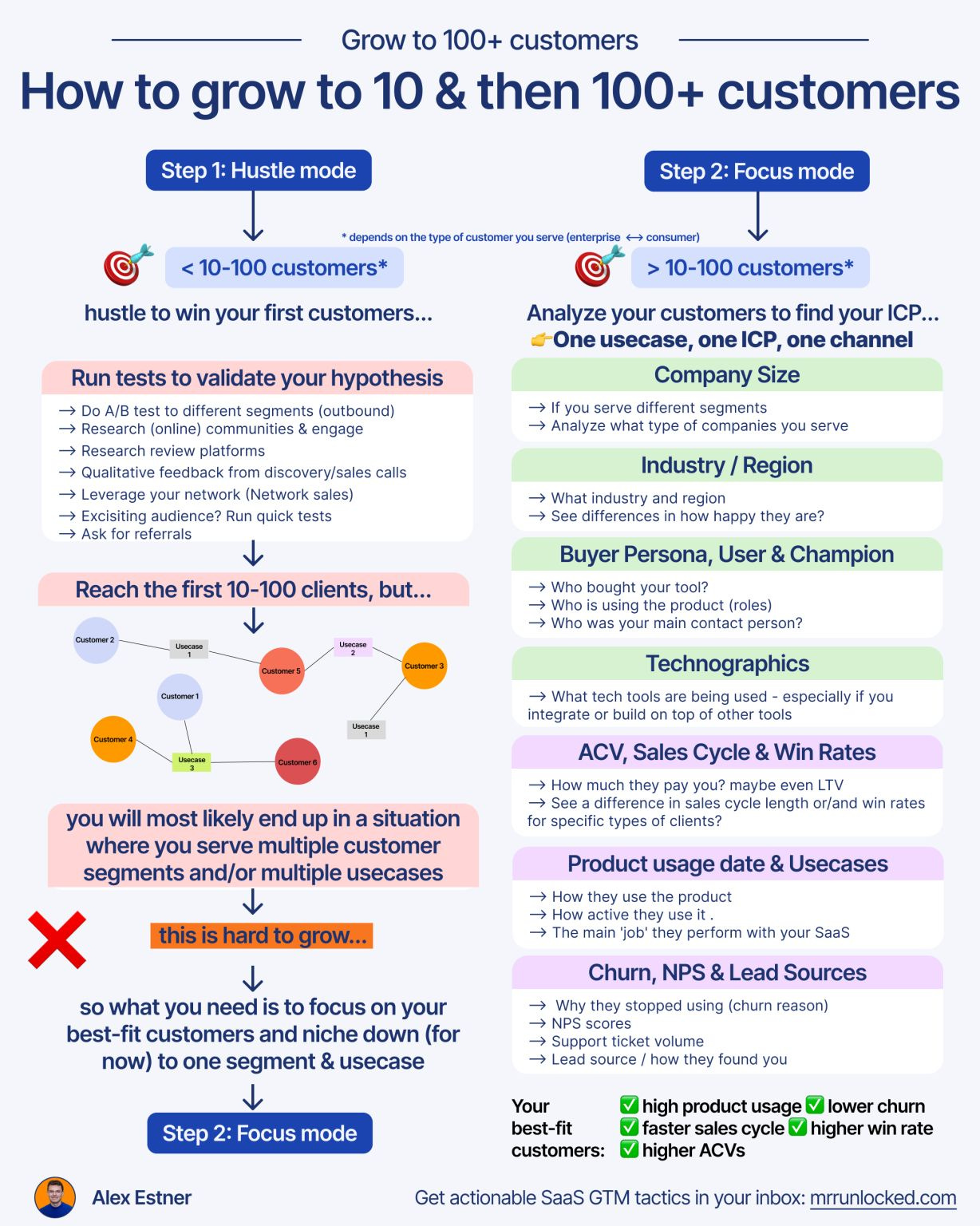
Your first 10 customers are about figuring out what works.
You talk to customers yourself.
You test different ICPs.
You change your messaging.
You try different channels.
You adjust your sales process.
A lot of it is manual.
And that’s exactly how it should be.
But once you start seeing patterns, you need to double down on what already works.
Which customers convert best?
Which message consistently gets their attention?
Which channel brings you the best opportunities?
Which sales process turns those opportunities into customers?
That’s how you build a repeatable GTM engine.
→ Action: Analyze what’s working and try to build the first repeatable GTM motion.
That’s your €0 → €1M GTM playbook.
It all comes down to one simple sequence:
1. Find your ICP
↓
2. Position your product
↓
3. Nail your messaging
↓
4. Get your pricing right
↓
5. Choose your GTM channel
↓
6. Run better demos
↓
7. Build your sales process
↓
8. Turn customers into social proof
↓
9. Double down on what works
The biggest mistake is trying to skip ahead.
€0 → €1M ARR is about finding something that works, making it repeatable, and only then scaling it.
That’s it for today.
3 ways I help founders build a strong GTM foundation 👇
If you’re somewhere between €0 → €1M ARR, I can help you with your GTM.
1️⃣ GTM Foundation Library
→ More than 50 frameworks, guides, and templates.
2️⃣ GTM Clarity Sprint
→ A complete GTM audit and a six-month action plan delivered in < 7 days
3️⃣ 1:1 GTM Advisory
→ Work directly with me to build your GTM, workstream by workstream